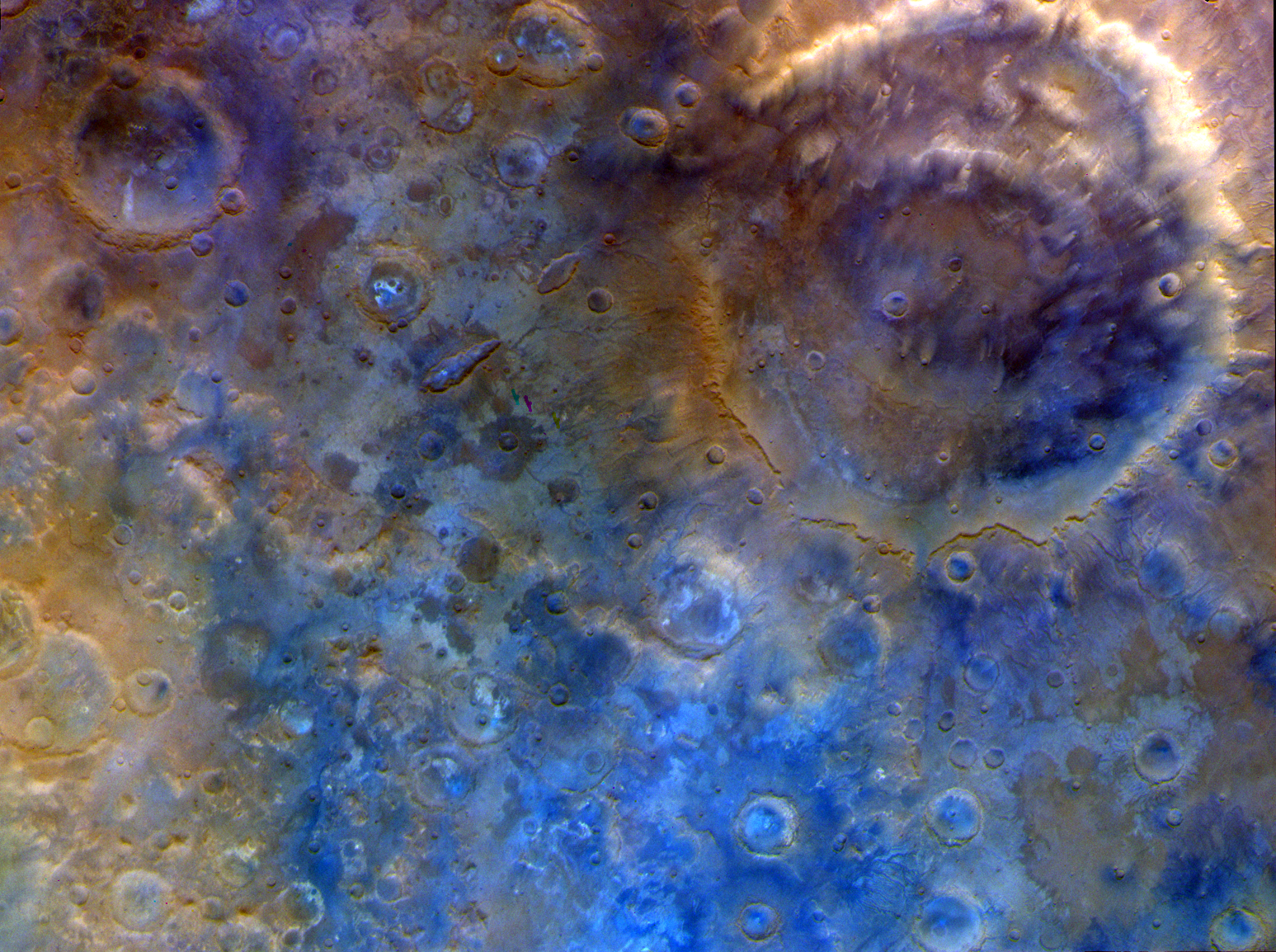
Glimpse of Mars: NASA's Psyche Mission Captures Stunning Image of Huygens Crater
nasa
4 hours ago
NASA's Psyche mission, en route to explore a metal-rich asteroid, recently captured a breathtaking, enhanced-color image of Mars' Huygens Crater. This image provides valuable insights into the Martian surface and showcases the capabilities of the Psyche mission's multispectral imager.

Huygens Crater, a massive double-ringed impact crater spanning approximately 290 miles (470 kilometers) in diameter, dominates the upper-left portion of the image. Located in the heavily cratered southern highlands of Mars, near 15 degrees south latitude, this region offers a glimpse into the planet's ancient past.
The vibrant and varied colors in the image are not merely aesthetic; they represent differences in the:
Analyzing these color variations allows scientists to infer the geological history and processes that have shaped this region of Mars.
The image was acquired using Imager A, part of the multispectral imager instrument aboard the Psyche spacecraft. The data was collected on May 15, 2026, shortly after the mission's closest approach to Mars.
To reveal details beyond what the human eye can perceive, the images underwent enhanced-color processing. This technique combines red, green, and blue data from specific imager filters to accentuate subtle color differences, providing a more detailed view of the Martian surface composition.
While the Psyche mission's primary objective is to explore the asteroid Psyche, a metal-rich body in the asteroid belt, this image of Mars demonstrates the capabilities of its imaging system. The data collected during the Mars flyby serves as a valuable test and calibration opportunity for the mission's instruments.
The Psyche mission aims to answer fundamental questions about the formation of planets and the composition of planetary cores by studying a unique, metallic asteroid. Key objectives include:
To learn more about NASA's groundbreaking Psyche mission, visit: https://science.nasa.gov/mission/psyche/
Tags
Original Source
nasa